

As sustainability becomes a priority for businesses and consumers alike, biodegradable tableware is rapidly replacing traditional plastic and foam products. Restaurants, caterers, food delivery services, and event organizers are increasingly choosing eco-friendly alternatives that reduce environmental impact without compromising quality.
Among the most popular options are biodegradable compartment plates and round biodegradable plates. While both offer excellent environmental benefits, they serve different purposes depending on food service requirements and customer expectations.
This guide from Antique Biodegradable explores the key differences, benefits, and ideal applications of both plate types to help businesses choose the right sustainable solution.
What Are Bagasse Plates?
Bagasse plates are manufactured from sugarcane fiber, a natural byproduct left after extracting juice from sugarcane. Instead of being discarded, this agricultural waste is transformed into durable, eco-friendly tableware.
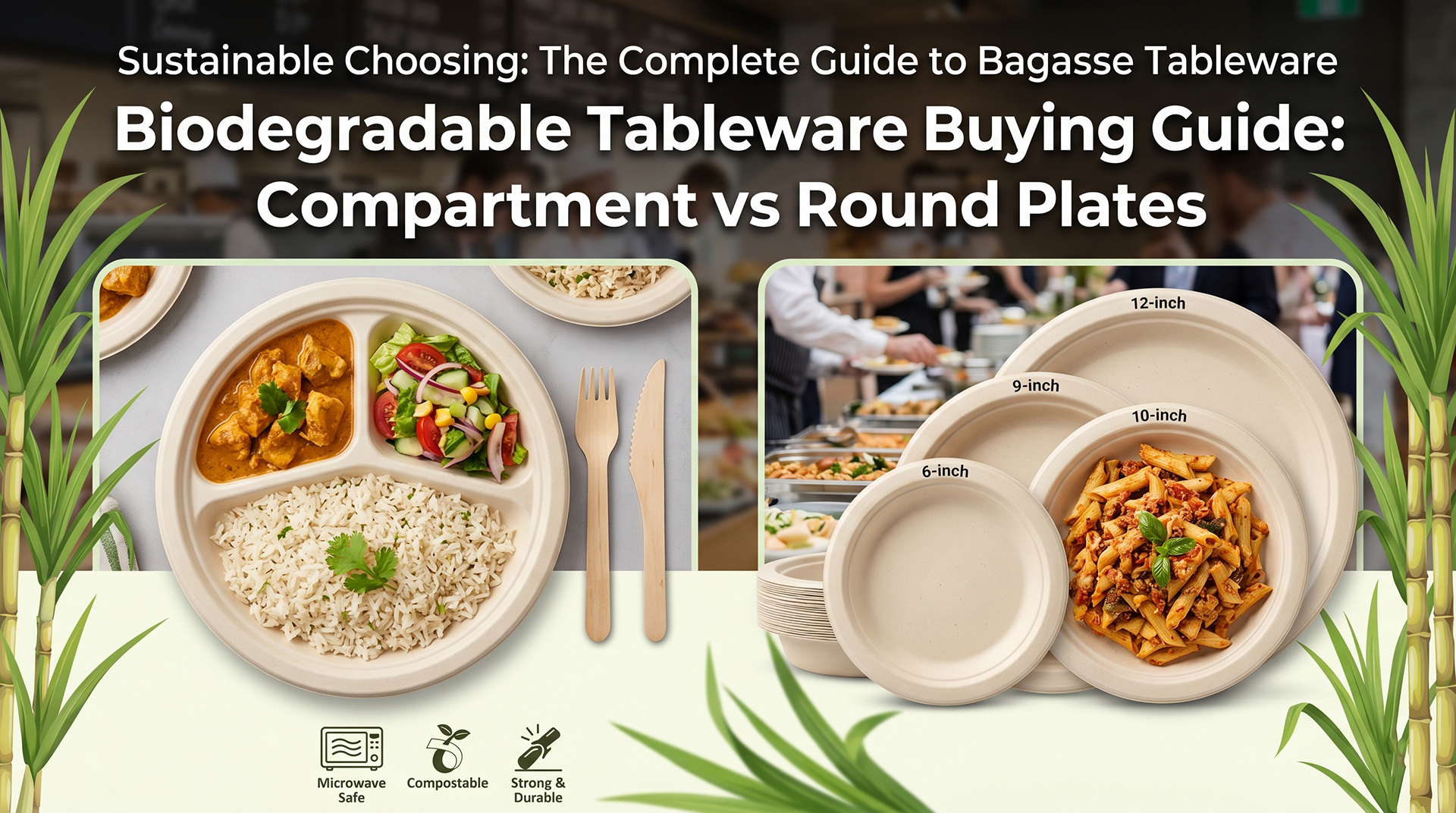
Benefits of Bagasse Plates
- 100% biodegradable and compostable
- Made from renewable resources
- Strong and durable construction
- Suitable for hot and cold foods
- Oil and grease resistant
- Microwave-safe and freezer-safe
- Plastic-free and chemical-free
These advantages make bagasse products one of the most sustainable choices for modern food service operations.
Why Businesses Are Switching to Biodegradable Plates
Environmental Responsibility
Biodegradable plates naturally decompose within months, reducing landfill waste and environmental pollution.
Compliance with Regulations
Many countries and regions have introduced restrictions on plastic tableware, encouraging businesses to adopt sustainable alternatives.
Enhanced Brand Image
Customers increasingly prefer brands that demonstrate environmental responsibility. Using eco-friendly packaging and tableware can strengthen customer trust and loyalty.
Reduced Carbon Footprint
Bagasse products utilize agricultural waste, making them significantly more sustainable than petroleum-based plastic products.
Compartment Plates vs Round Plates: Understanding the Difference
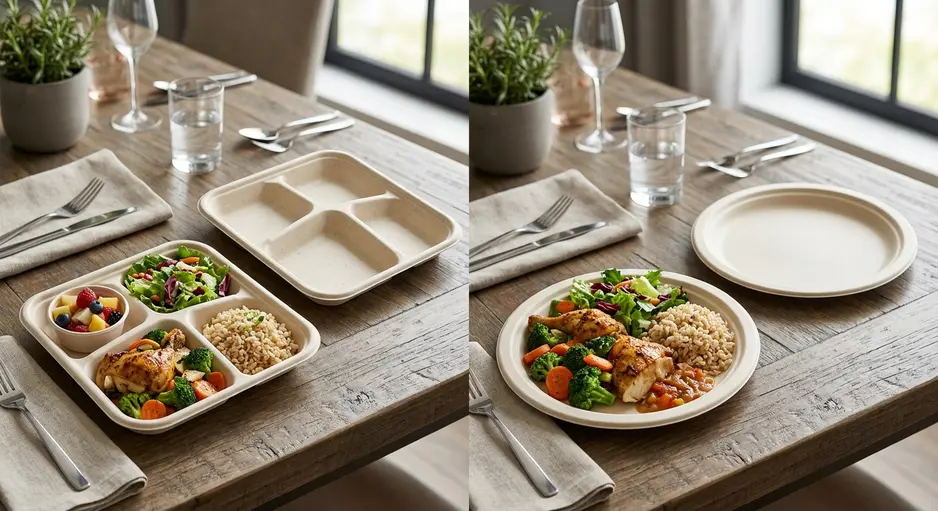
Although both products are biodegradable and eco-friendly, their design significantly impacts functionality and usage.
Compartment Plates
Compartment plates feature multiple sections designed to separate food items.
Advantages
- Prevent food mixing
- Better portion control
- Improved meal presentation
- Reduced spillage during transportation
- Ideal for complete meals
Round Plates
Round plates provide a single open surface suitable for serving various food items.
Advantages
- Versatile serving option
- Attractive food presentation
- Easy stacking and storage
- Suitable for multiple cuisines
- Cost-effective for general use
When to Choose Biodegradable Compartment Plates
Compartment plates are specifically designed for structured meal service where food separation is important.
Best Applications
- Takeaway meal boxes
- Corporate catering
- School and college canteens
- Hospital food service
- Conferences and large events
- Railway and airline catering
Benefits for Food Service Businesses
- Better customer experience
- Improved food organization
- Reduced leakage and spills
- Enhanced food presentation
- Easier transportation
Avilable Compartment Plates
- 9 Inch 3 Compartment Plate
- 10 Inch 3 Compartment Plate
- 11 Inch 4 Compartment Plate
- 12 Inch 4 Compartment Plate
- 9 Compartment Round Plate
- 3 Compartment Square Meal Tray
- 5 Compartment Rectangle Meal Tray
- 6 Compartment Rectangle Meal Tray
When to Choose Round Biodegradable Plates
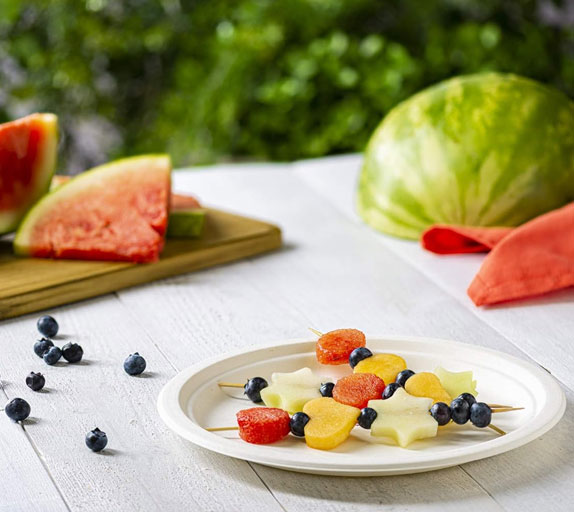
Round plates are the preferred choice for versatile food service environments.
Ideal Uses
- Restaurants
- Catering services
- Buffet setups
- Wedding events
- Cafes and bakeries
- Food courts
Benefits for Businesses
- Elegant presentation
- Flexible serving options
- Easy handling
- Efficient storage
- Cost-effective purchasing
Durability and Performance Comparison
Heat Resistance
Both compartment and round bagasse plates can withstand hot food without losing shape.
Oil and Grease Resistance
High-quality bagasse plates resist grease penetration, making them suitable for fried and oily foods.
Leak Resistance
Compartment plates generally provide better spill control because their divided sections help contain liquids and sauces.
Strength and Stability
Modern bagasse plates are strong enough to hold heavy meals without bending or collapsing.
Important Factors to Consider Before Buying
Plate Size
Choose dimensions that suit your menu requirements.
Thickness and Strength
Thicker plates offer greater durability and are ideal for heavy meals.
Food Type
- Saucy dishes
- Oily foods
- Multiple food items
- Single-course meals
Storage Requirements
Round plates are generally easier to stack, while compartment plates require slightly more storage space.
Budget Considerations
Compartment plates typically cost slightly more due to their advanced design and manufacturing process.
Sustainability Benefits of Bagasse Tableware
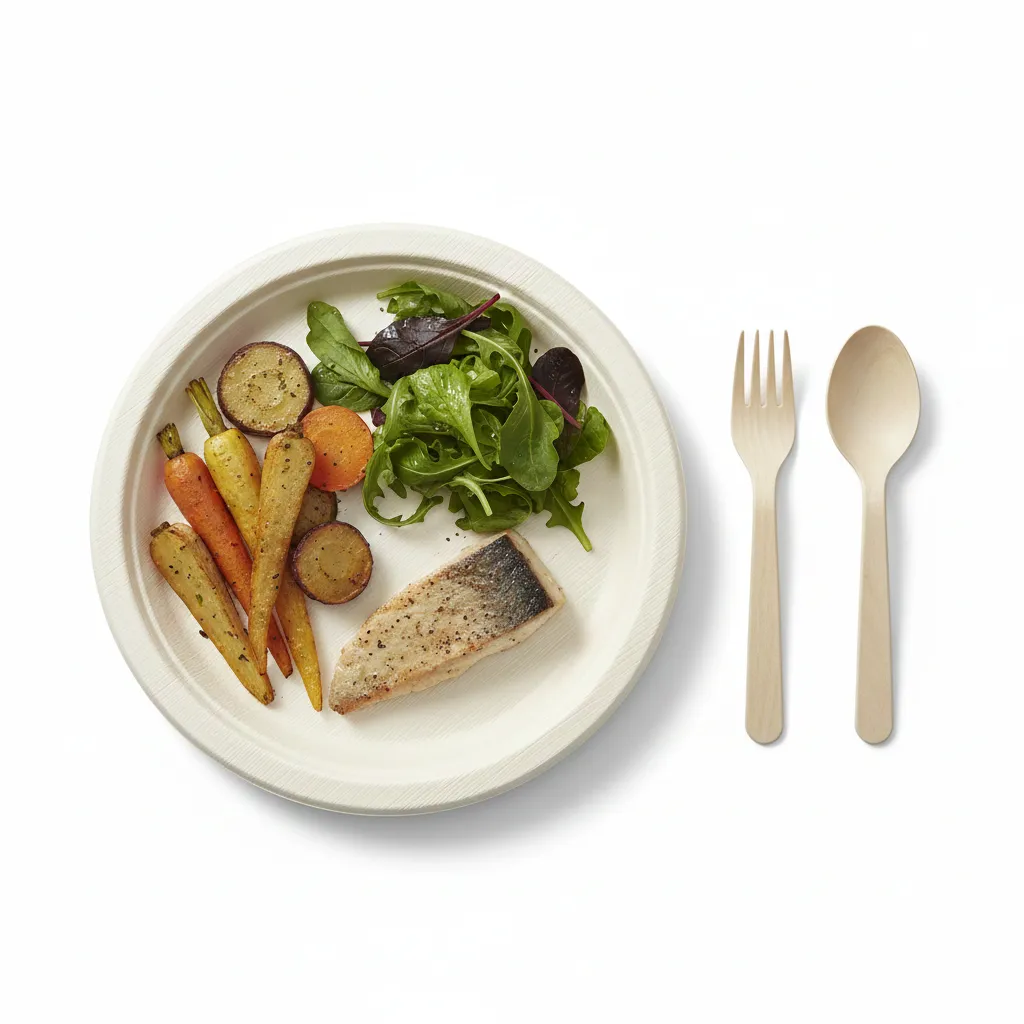
Reduced Plastic Waste
Unlike plastic products, bagasse plates decompose naturally without leaving harmful residues.
Renewable Resource Utilization
Bagasse is derived from sugarcane waste, reducing dependence on virgin raw materials.
Lower Environmental Impact
The manufacturing process generates significantly lower carbon emissions compared to plastic production.
Compostability
Under proper composting conditions, bagasse plates can decompose within 60 to 90 days.
Why Choose Antique Biodegradable?
At Antique Biodegradable, we are committed to delivering high-quality, eco-friendly tableware solutions for businesses worldwide.
- Premium-quality bagasse products
- Food-grade certified materials
- Durable and leak-resistant designs
- Competitive bulk pricing
- Consistent product quality
- Reliable supply chain support
- Sustainable manufacturing practices
Whether you need compartment plates for meal service or round plates for versatile food presentation, Antique Biodegradable provides environmentally responsible solutions designed for modern businesses.
Buy Eco-Friendly Bagasse Plates
Conclusion
Both compartment plates and round plates offer excellent sustainability benefits and reliable performance. The best choice depends on your specific business requirements.
Choose compartment plates if you serve complete meals, require food separation, or need better spill control.
Choose round plates if you prioritize versatility, attractive presentation, and cost-effective serving solutions.
By investing in biodegradable bagasse tableware, businesses can reduce their environmental impact while meeting customer expectations for sustainable practices.
Frequently Asked Questions (FAQs)
Are bagasse plates better than plastic plates?
Yes. Bagasse plates are biodegradable, compostable, and made from renewable resources.
Can bagasse plates hold hot food?
Yes. High-quality bagasse plates are heat-resistant and suitable for serving hot meals.
Are compartment plates more expensive than round plates?
Generally, compartment plates cost slightly more because of their specialized design.
Are bagasse plates microwave-safe?
Yes. Most bagasse plates can safely be used in microwave ovens.
How long do bagasse plates take to decompose?
Typically between 60 and 90 days under proper composting conditions.
Which plate type is best for takeaway food?
Compartment plates are usually preferred because they keep food items separated and reduce spills.
Can bagasse plates be used for oily foods?
Yes. Quality bagasse plates are designed to resist oil and grease.